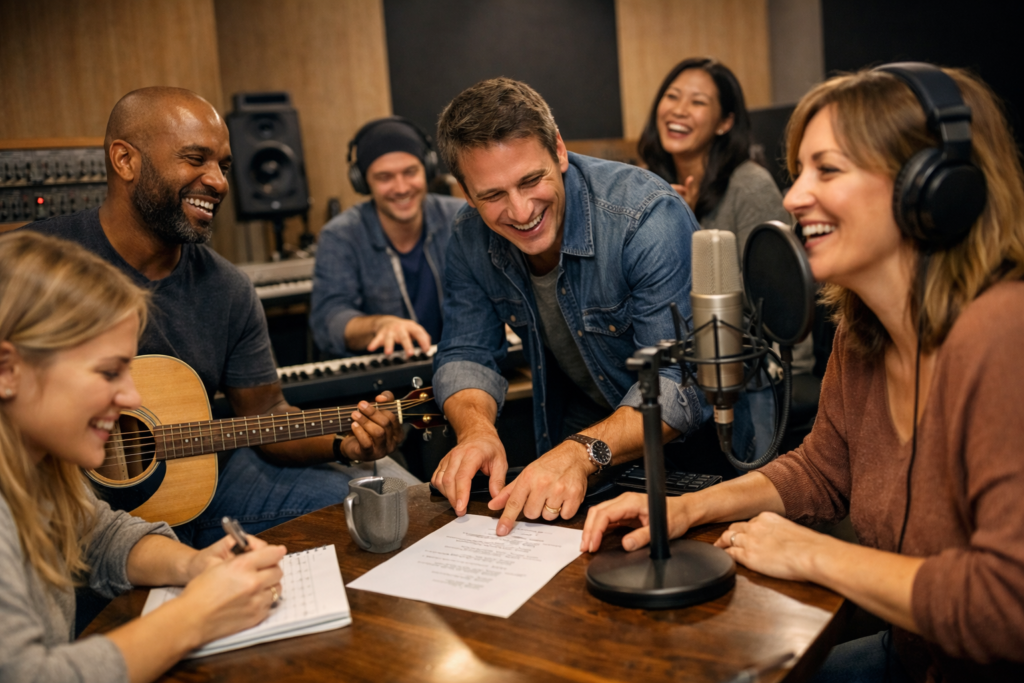
Songwriting is not just for bands and artists anymore, it is quietly becoming one of the most effective team experiences around, with one large trial showing that 48 group songwriting sessions led to measurable boosts in confidence, optimism, and coping skills compared with a control group.
| Question | Answer |
|---|---|
| What are songwriting sessions for teams? | Guided workshops where your team writes an original song together, combining lyrics, melody, and ideas in a structured, time-boxed format, often led by a facilitator in a studio like Form Wave Studio. |
| Do team songwriting sessions really help collaboration? | Yes, research on group music-making shows strong gains in teamwork, focus, and persistence, which are the exact skills teams practice as they create and refine a shared song idea. |
| How long should a team songwriting session last? | Most teams do well with 90 minutes to half a day for a single song, while multi-day camps, like university songwriting projects, can produce an entire collection of material. |
| Do participants need musical experience? | No, a good facilitator will create roles for every comfort level, from lyric writing to rhythm ideas to arranging, so everyone contributes something real to the final track. |
| Can we walk away with a recording of our team song? | Yes, in a studio environment your team can leave with a demo or polished recording, similar in process to how we create projects like Cold Arc. |
| Is this just for corporate teams? | No, we see bands, creative collectives, nonprofit groups, and student teams using songwriting sessions to connect around a shared story and goal. |
Traditional team-building often feels forced, while songwriting lets people create something that actually sounds and feels like them. It uses the same collaboration muscles your team needs at work, but in a lower-stakes and more creative setting.
Group music-making is not just “fun”, it is linked to real wellbeing gains, like reduced anxiety and better social connection in structured programs. When people shape lyrics together, agree on melodies, and decide what the song should say, they naturally practice listening, feedback, and compromise.
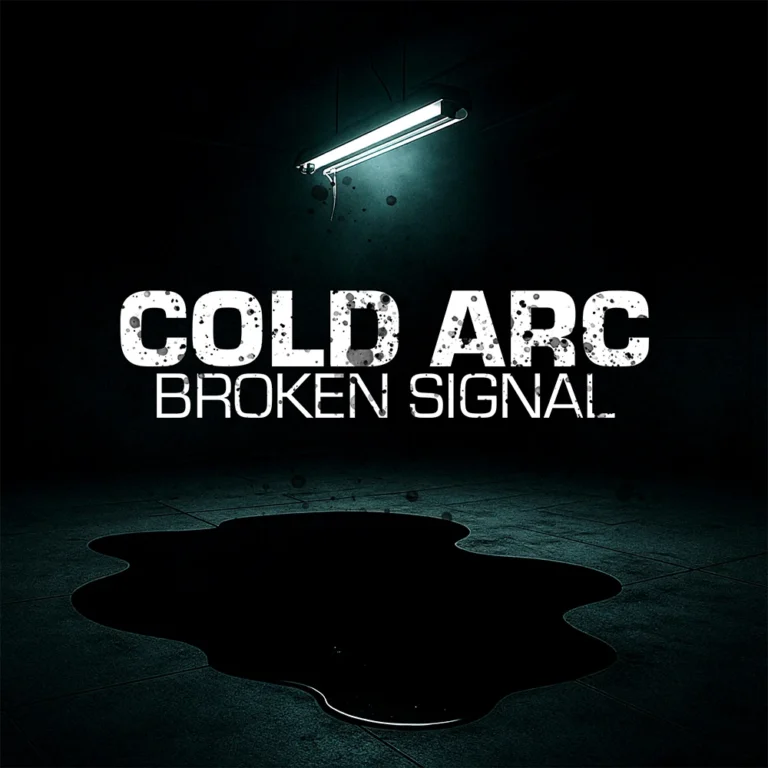
In our world, we see how a record like Cold Arc’s “Broken Signal” started as riffs, licks, and notebook lines before it became a finished album. When your team goes through a similar, compact version of that journey, they feel that shared ownership.
Instead of leaving with a vague memory of a workshop, your group walks away with a song they can listen to again, share, and remember as something they built together.
Songwriting compresses a full creative project into a single experience, so your team gets a clear before, during, and after. They start with a blank page and end with lyrics, structure, and often a recording or live performance.
Along the way, people step into different roles than they usually hold at work. The quiet project manager might deliver the best chorus line, while the outspoken extrovert might find themselves listening more closely during verses.
Collaboration practice: Agreeing on lyrics, themes, and arrangement in real time.
Psychological safety: Sharing ideas that feel personal but happen in a playful context.
Shared story: Turning your team’s values or current challenge into something tangible.
Energy and focus: Using music to keep people present and engaged.
In longer programs, teams can even build multiple songs that reflect different parts of their journey, like problem, solution, and future vision. That narrative sticks much more than another slide deck or talking point list.
Not every group needs the same format, so we think about sessions in terms of length, depth, and output. Some teams want a quick creative spark, while others are ready for a full-day or multi-day camp.
Great for conferences or offsites where you want a breakout that feels different. In this format, we focus on one strong chorus or a verse and hook, with the facilitator carrying more of the musical load.
Teams still co-write lyrics and shape the direction, but you keep the scope tight so no one feels overwhelmed. You can also link multiple short sprints across a day, with smaller groups each writing a different section of one big song.
Here your team can write a complete song from idea to demo. That includes theme discovery, lyric writing, basic arrangement, and a rough recording or performed version.
This format gives room for people to try instruments, experiment with melodies, and revise lyrics. It feels much closer to how we produce actual releases in the studio, just compressed into a single day.
For bigger initiatives, like leadership programs or creative teams, multi-day songwriting camps can lead to a small “EP” of songs. University projects using this model have written around 30 songs in just two 2-day camps, with about half moving toward recording.
Multi-day settings give your team time to build confidence between sessions. On day one people feel tentative, by day two or three they are pitching lines and melodic ideas naturally.
A clear 5-step framework to guide collaborative team songwriting sessions. Use this flow to structure kickoff, collaboration, and wrap-up.
Over time, we have found that almost every good team songwriting session follows a simple arc. You do not have to be a producer or touring musician to guide this, you just need to hold the shape of the process.
Start by asking what story your team wants to tell. It could be about your journey, your customers, a recent challenge, or the future you are building together.
Capture words and phrases on a whiteboard or shared document. Look for patterns, recurring ideas, and lines that feel honest or surprising.
Divide into smaller groups and assign sections like verse 1, verse 2, and chorus. Encourage simple, conversational lines over perfect poetry, because clarity matters more than cleverness in a group setting.
After a set time, bring everyone back to share their pieces. Combine and edit as a group, keeping the best lines and adjusting anything that feels off.
At this stage, a facilitator or musically comfortable team member can suggest simple chord progressions and melodic ideas. Others tap rhythms, hum lines, or suggest phrasing.
You do not need complex harmony, just something that carries the emotion of the lyrics. Many great songs use only three or four chords.
Decide on a structure, such as intro, verse, chorus, verse, chorus, bridge, and final chorus. Assign roles for any live performance or recording, like lead vocal, backing vocal, percussion, and spoken word sections.
Run through the song a few times and adjust any lines that feel awkward to sing. Record rough takes on phones so the team can hear how it is coming together.
If you are in a studio environment, this is where we move from rehearsal into recording. Even a simple live-off-the-floor take can become a powerful keepsake for your team.
After the session, share the audio with everyone and keep it accessible. You can play it at future meetings, use it in internal videos, or just keep it as a reminder of what your group built together.
Did You Know?
86.9% of participants in a 52-week group-singing program reported positive impacts on well-being, highlighting how structured music-making can reliably boost mood and connection in group settings.
We care about the craft and the science behind it. Recent studies on group songwriting have shown significant gains in mental-health confidence, including optimism, coping, and advocacy, compared with control conditions.
Other work with informal caregivers has found that songwriting programs can reduce trait anxiety and improve social and physical functioning. That is not just nice to have, it is exactly what many teams need after years of stress and hybrid work shifts.
When people see their own words and experiences woven into a song, they feel seen, heard, and connected in a way that is hard to reach in regular meetings.
On the skill side, research on music participation in general shows that people strongly associate it with better focus, collaboration, and perseverance. Those traits carry directly back into day-to-day work once the session is over.
The best team songwriting sessions are designed so that everyone has a clear part to play. We usually recommend groups of 6 to 12 people for a single song, though you can scale up by creating multiple smaller songwriting pods.
Within each group, let people choose or be gently assigned roles based on comfort and curiosity. Some will gravitate to lyrics, some to rhythm or clapping patterns, some to singing, and some to arrangement and structure.
| Role | What They Do |
|---|---|
| Lyric Lead | Shapes lines, ensures the story feels true to the team. |
| Melody Guide | Suggests melodic ideas and helps fit words to rhythm. |
| Rhythm Section | Builds grooves with claps, percussion, or simple instruments. |
| Arrangement Brain | Thinks about structure, dynamics, and where each part fits. |
Your facilitator keeps time, nudges decisions when the group gets stuck, and keeps the focus on finishing a song rather than polishing it forever. That done-is-better-than-perfect mindset is part of the lesson.
When teams move through this structure once, they are often ready and willing to try it again with less guidance. That is when the real cultural change starts to show up.
Good prep can turn anxious participants into curious ones. We always suggest framing the session clearly, so people know it is about expression, not vocal talent or musical ability.
Before the day, share a short note that covers why you are doing this, what the rough schedule is, and what people should bring. Usually, that is just themselves, comfortable clothes, and an open mind.
Clarify that no prior music experience is required.
Explain that the goal is to finish a song together, not to impress anyone.
Mention how the song might be used later, like internal events or just a team keepsake.
If your team wants extra context, you can share examples of finished songs from projects like Cold Arc. This helps them see how simple ideas can grow into full productions over time.
On the logistics side, confirm timing, breaks, and accessibility needs. The smoother the practical side feels, the more energy your team will have for the creative work.
Did You Know?
In a major survey of music participation, 85% of respondents said music-making developed their teamwork and collaboration skills, which lines up closely with what teams practice in collaborative songwriting sessions.
What you do with the finished song matters. A quick phone recording is often enough to bring people back to the feeling of the day, but a studio-quality capture can make the experience feel even more real.
In our sessions, we treat your team’s song like a mini release, similar in spirit to how we work on albums and singles. That does not mean spending weeks on mixing, but it does mean giving the track respect as something that represents your group.
Record a live performance at the end of the session.
Capture separate vocal and instrument takes if time allows.
Create a simple cover image that reflects your team or theme.
Later, you can share the song on your internal channels, play it before all-hands meetings, or use it as a soundtrack for recap videos. Some teams even revisit the song a year later to see how their story has evolved.
The key is to treat the output as an artifact of your culture, not just a one-off activity. That keeps the energy of the session alive long after everyone has left the room.
Form Wave Studio grew out of decades of writing riffs, licks, and full songs that lived in notebooks and demos before becoming full projects. That background is exactly what we bring into team sessions.
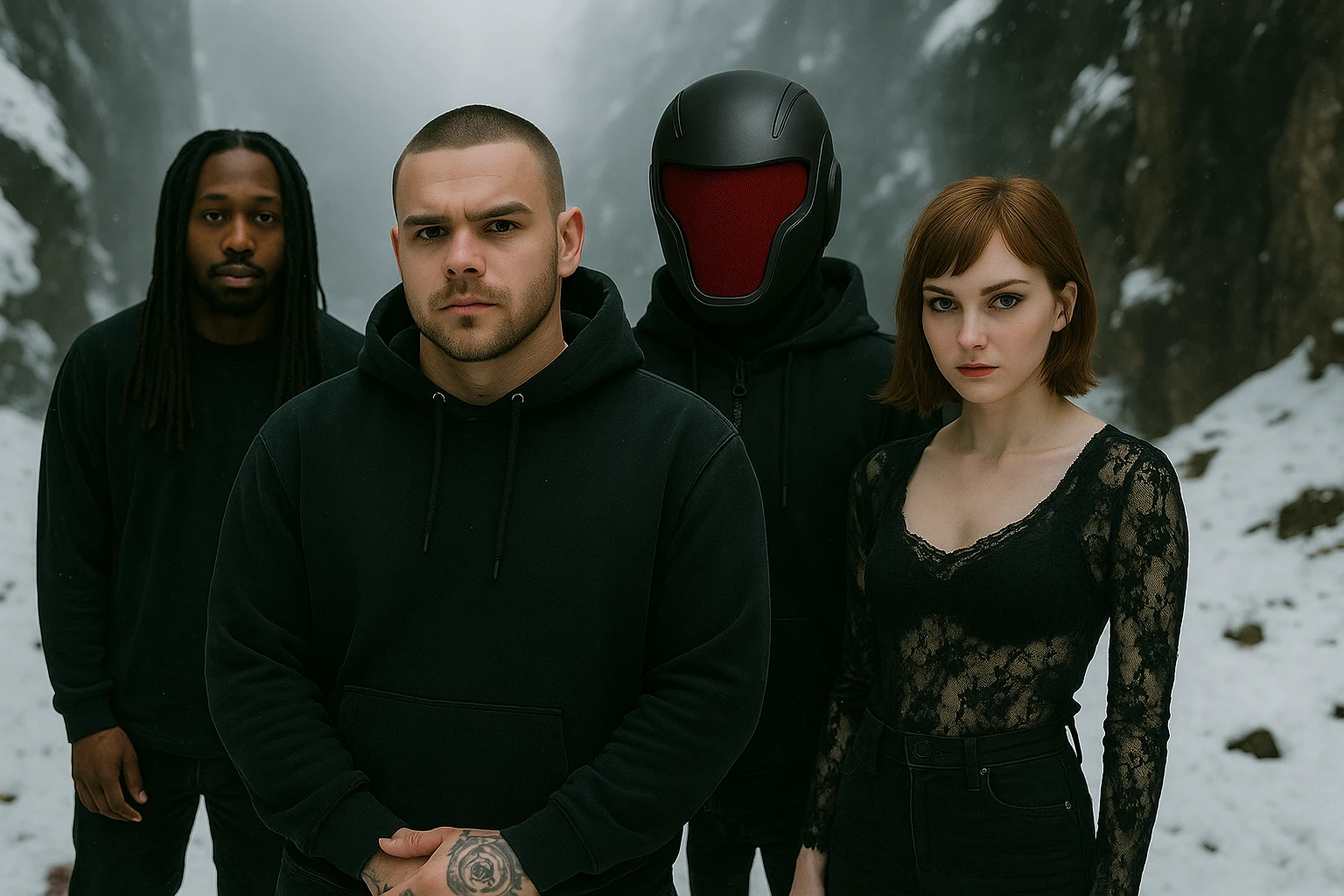
On the artist side, projects like Cold Arc mix heavy guitars, industrial textures, and direct lyrics into something modern and focused. We take the same respect for sound and story when we work with teams, just with a different creative endpoint.
We know what it feels like to stare at a blank session file or empty page, and we know how to get from first idea to finished track without losing people along the way. That path is what your team gets to experience in miniature.
Our role is to make sure the session never becomes a performance contest. Instead, it stays a shared experiment where every voice matters and every idea gets a fair listen.
If you are planning your first session, a few simple choices can make the day smoother and more enjoyable. Start by picking a theme that matters to your team right now, not just a generic “we are great” message.
Make sure the space feels relaxed and free of distractions, with enough room to break into smaller groups. Background music before and after the session can help people ease into a more creative mindset.
Keep instructions clear and short, then let people create.
Set firm time boxes for each phase so you reach a finished song.
Celebrate small wins, like a strong line or a chorus that everyone can sing.
Have a simple way to gather feedback at the end. A quick round where everyone shares one word about how they feel and one moment they enjoyed is enough.
Most importantly, remember that the value is in the process, not just the final track. The conversations, laughter, and small risks people take with each other are what last.
Songwriting sessions for teams give your group a rare chance to build something real together in a short, focused burst of time. You start with loose phrases and shared experiences and end with a song that your team can keep, play, and remember.
For us, this is the same journey that drives our own music. If you want your next team gathering to feel more like a band session than another meeting, we would love to share that process with you and help your team write its own soundtrack.